Sessions & Tracks
Track 1: Women's Health Across the Life Course
This track examines the changing health needs of women from adolescence through later life. Presentations will address puberty, reproductive years, pregnancy, menopause, ageing, and healthy longevity. Researchers may discuss hormonal, metabolic, social, and environmental influences on women's wellbeing. Preventive care models for different age groups will also be considered. The importance of continuity between primary, specialist, and community care will be highlighted. Applications will include screening, education, chronic disease prevention, and personalized health planning.
Track 2: Breast Cancer Prevention and Early Detection
This track focuses on strategies for reducing breast cancer risk and identifying disease at an earlier stage. Topics may include mammography, ultrasound, magnetic resonance imaging, clinical assessment, and risk-based screening. Researchers will discuss family history, inherited risk, lifestyle factors, and population-level prevention programmes. Advances in digital imaging and artificial intelligence-supported interpretation will be considered. Community education and participation in screening will also receive attention. The track will promote timely diagnosis and improved treatment pathways.
Track 3: Gynecologic Oncology and Cancer Care
This track examines cancers affecting the reproductive system, including ovarian, cervical, uterine, vulvar, and vaginal cancers. Presentations may address risk assessment, clinical symptoms, diagnostic pathways, surgery, systemic therapy, and radiation treatment. Researchers will discuss multidisciplinary approaches to complex gynecologic malignancies. New biomarkers and treatment-selection methods may also be presented. Special emphasis will be placed on improving referral systems and reducing delays in care. The track will explore strategies for improving survival and quality of life.
Track 4: Cervical Cancer Prevention and HPV
This track explores the prevention, detection, and management of cervical cancer and human papillomavirus infection. Topics may include vaccination, HPV testing, cytology, colposcopy, precancer treatment, and community screening. Researchers will examine ways to improve vaccine confidence and reach underserved populations. Digital reminders and self-sampling approaches may also be discussed. The role of education and public-health partnerships will be emphasized. The track will support global efforts to reduce preventable cervical cancer deaths.
Track 5: Precision Oncology for Women
This track focuses on using individual biological information to guide cancer prevention and treatment. Presentations may cover genomic testing, molecular profiling, biomarkers, targeted medicines, and immunotherapy. Researchers will discuss how tumour characteristics can influence clinical decisions and treatment response. Ethical issues related to genetic information and patient consent will also be considered. Data integration may help identify more accurate risk and treatment strategies. Applications will include breast, ovarian, endometrial, and other women-related cancers.
Track 6: Cancer Screening and Diagnostic Innovation
This track examines new methods for finding cancer and precancerous conditions at the earliest possible stage. Topics may include liquid biopsy, molecular testing, advanced imaging, artificial intelligence, and point-of-care diagnostics. Researchers will discuss test accuracy, accessibility, affordability, and integration into clinical pathways. Screening strategies for high-risk and underserved populations will be explored. Quality assurance and patient communication will also be addressed. The track will highlight innovations that can shorten the time between suspicion and diagnosis.
Track 7: Cancer Treatment and Therapeutic Developments
This track presents current and emerging approaches to treating cancer in women. Sessions may include surgery, chemotherapy, radiation, hormone therapy, immunotherapy, targeted therapy, and combination treatment. Researchers will examine treatment response, resistance, toxicity, and patient-specific decision-making. New clinical trial findings and real-world evidence may be discussed. Supportive care during treatment will also receive attention. The track will encourage collaboration in developing safer and more effective cancer therapies.
Track 8: Reproductive Health and Fertility Preservation
This track explores the relationship between cancer care, reproductive health, and future fertility. Topics may include fertility counselling, ovarian protection, egg and embryo preservation, reproductive surgery, and pregnancy after cancer treatment. Researchers will discuss the effects of chemotherapy, radiation, hormonal therapy, and surgery on reproductive function. Ethical and emotional considerations for patients and families will be addressed. Multidisciplinary communication before treatment will be emphasized. The track will support informed choices and patient-centred fertility care.
Track 9: Maternal Health and Pregnancy Care
This track examines health conditions affecting women during pregnancy, childbirth, and the postpartum period. Presentations may address maternal complications, high-risk pregnancy, pregnancy-related cancers, and coordination between obstetric and oncology teams. Researchers will discuss safe diagnostic imaging, treatment planning, and medication decisions during pregnancy. Access to skilled maternity services will also be considered. Postpartum follow-up and mental-health support will receive attention. The track will promote safer, respectful, and evidence-based maternal care.
Track 10: Menopause and Midlife Women's Health
This track focuses on physical, hormonal, emotional, and social changes occurring during midlife. Topics may include menopausal symptoms, bone health, cardiovascular risk, sexual wellbeing, sleep, and metabolic health. Researchers will discuss hormone therapy, non-hormonal treatments, lifestyle interventions, and individualized counselling. The relationship between menopause and cancer risk will also be examined. Healthcare access and communication for midlife women will be highlighted. The track will encourage comprehensive care beyond symptom management.
Track 11: Women's Cardiovascular and Metabolic Health
This track examines heart disease, hypertension, diabetes, obesity, and metabolic conditions affecting women. Presentations may address sex-specific symptoms, pregnancy-related risk, menopause, inflammation, and long-term cardiovascular prevention. Researchers will discuss early assessment, lifestyle medicine, medication management, and risk prediction. The connection between metabolic health and cancer outcomes may also be considered. Public-health approaches to prevention will receive attention. The track will promote earlier recognition and improved management of major chronic diseases.
Track 12: Mental Health and Psycho-Oncology
This track explores the emotional and psychological effects of women's health conditions and cancer. Topics may include anxiety, depression, body-image concerns, trauma, treatment-related distress, and adjustment after diagnosis. Researchers will discuss counselling, peer support, behavioural interventions, and integrated mental-health services. The needs of families and caregivers will also be considered. Screening for psychological distress in clinical settings will be encouraged. The track will emphasize compassionate care that addresses both emotional and physical wellbeing.
Track 13: Cancer Survivorship and Rehabilitation
This track focuses on the long-term needs of women living after cancer treatment. Presentations may address fatigue, pain, lymphoedema, fertility concerns, sexual health, cognitive changes, and return to work. Researchers will discuss exercise, nutrition, rehabilitation, self-management, and follow-up planning. Survivorship care models that connect oncology with primary care will also be explored. Patient-reported outcomes and quality-of-life measures will receive attention. The track will support recovery, independence, and healthy long-term living.
Track 14: Women's Health in Underserved Communities
This track examines inequalities affecting access to women's healthcare and cancer services. Topics may include rural care, low-resource settings, poverty, language barriers, cultural factors, disability, migration, and limited screening access. Researchers will discuss community-led programmes, mobile clinics, telehealth, and culturally appropriate education. The impact of social determinants on diagnosis and survival will be considered. Strategies for building trust and improving healthcare participation will be presented. The track will encourage more inclusive and equitable health systems.
Track 15: Public Awareness and Cancer Education
This track explores effective approaches to increasing knowledge about women's health and cancer prevention. Presentations may address health literacy, community campaigns, school education, media communication, and patient information tools. Researchers will examine how misinformation and fear influence screening and treatment decisions. Digital platforms and social networks may be used to reach diverse audiences. Communication strategies for discussing symptoms, risk, and diagnosis will be highlighted. The track will promote informed participation in healthcare.
Track 16: Genetic Risk and Hereditary Cancers
This track focuses on inherited factors associated with breast, ovarian, endometrial, and other cancers. Topics may include genetic testing, family-history assessment, counselling, risk-reducing surgery, and enhanced surveillance. Researchers will discuss ethical issues, privacy, informed consent, and communication of inherited risk. New genetic markers and testing technologies may also be presented. Family-centred approaches to prevention will be considered. The track will support responsible use of genomic information in women's cancer care.
Track 17: Immunotherapy and Emerging Cancer Therapies
This track examines new treatments that use the immune system and other advanced biological mechanisms. Presentations may cover immune checkpoint inhibitors, cellular therapies, vaccines, antibody-based treatments, and combination strategies. Researchers will discuss response prediction, adverse effects, resistance, and treatment sequencing. The role of tumour biology and the surrounding immune environment will be explored. Clinical trial design and patient selection will also be addressed. The track will highlight innovations that may expand treatment options for women with difficult-to-treat cancers.
Track 18: Clinical Trials and Cancer Research
This track explores the design, conduct, and interpretation of clinical research in women's health and oncology. Topics may include trial methodology, patient recruitment, real-world evidence, outcome measures, and research ethics. Researchers will discuss the importance of including diverse populations in clinical studies. New approaches for patient participation and decentralized trials may also be considered. Collaboration between hospitals, universities, industry, and patient groups will be encouraged. The track will support reliable evidence generation and faster translation into practice.
Track 19: Digital Health and Artificial Intelligence
This track examines the use of digital systems and intelligent technologies in women's healthcare. Presentations may include remote monitoring, electronic health records, predictive analytics, clinical decision support, and AI-assisted imaging. Researchers will discuss data security, algorithmic fairness, transparency, and clinical validation. Digital tools for screening reminders, symptom assessment, and survivorship support may also be explored. The importance of human oversight and patient consent will be emphasized. The track will consider how technology can improve access, efficiency, and continuity of care.
Track 20: Palliative, Supportive, and End-of-Life Care
This track addresses comfort, dignity, and quality of life for women living with advanced or serious illness. Presentations may cover pain, breathlessness, fatigue, nausea, emotional distress, and communication about care preferences. Researchers will discuss early palliative-care integration and support for families and caregivers. Cultural, spiritual, and ethical considerations will also be included. Home-based and community-based care models may be explored. The track will promote compassionate care throughout the entire illness journey.
Track 21: Endometriosis, PCOS and Benign Gynaecological Conditions
Presentations will examine endometriosis, adenomyosis, polycystic ovary syndrome, uterine fibroids, and chronic pelvic pain, conditions that affect a large share of women yet remain comparatively under-researched and frequently misdiagnosed. Topics may include diagnostic delay, the role of ultrasound and laparoscopy, hormonal and surgical management, and fertility implications. Researchers will discuss insulin resistance, hyperandrogenism, inflammation, and metabolic consequences in PCOS, alongside long-term risks of endometrial disease and cardiovascular conditions. Attention will be given to adolescent presentation, pain phenotyping, and the psychological impact of chronic symptoms. Patient-reported outcomes, shared decision-making, and multidisciplinary pelvic pain clinics will be highlighted. Discussions will connect basic science with everyday clinical practice and give visibility to conditions that are often dismissed.
Track 22: Women's Microbiome, Gut Health and Hormonal Balance
Presentations will explore how microbial communities in the gut, vagina, breast, and reproductive tract influence hormonal balance, immunity, and disease risk in women. Topics may include the estrobolome and oestrogen metabolism, vaginal microbiota and bacterial vaginosis, recurrent urinary tract infections, and the role of the microbiome in infertility and pregnancy outcomes. Researchers will discuss diet, fibre, fermented foods, probiotics, prebiotics, antibiotics, and faecal microbiota transplantation as modifiable influences. Attention will be given to microbiome changes across puberty, pregnancy, menopause, and cancer treatment. Links to obesity, insulin resistance, autoimmune disease, and treatment response will be examined. Sequencing technologies, standardised sampling, and reproducibility across populations will be considered. Emerging microbiome science will be translated into practical guidance for clinicians and patients.
Track 23: Climate, Environment and Women's Health
Presentations will examine how climate change, air pollution, chemical exposures, and environmental degradation shape women's health across the life course. Topics may include endocrine-disrupting chemicals, microplastics, pesticides, and heavy metals, and their effects on fertility, puberty, pregnancy outcomes, and hormonal health. Researchers will discuss heat exposure in pregnancy, vector-borne and waterborne disease, food and water insecurity, and the health consequences of climate-related disasters. Occupational exposures in agriculture, textiles, electronics, and informal work will be considered. Attention will be given to menstrual health management, sanitation, and household air pollution from cooking fuels. Chemical regulation, planetary health education, and women's leadership in climate-resilient health systems will be highlighted. Environmental science will be connected with clinical and public-health practice.
Track 24: Lung Cancer in Women — The Overlooked Epidemic
Presentations will address the growing burden of lung cancer among women, particularly in never-smokers, where incidence continues to rise without a fully explained cause. Topics may include genetic susceptibility, EGFR, ALK, KRAS, and ROS1 alterations, family history, and the influence of second-hand smoke, biomass fuel, radon, and air pollution. Researchers will discuss sex differences in tumour biology, hormonal influences, immune response, and treatment tolerance. Attention will be given to stigma, delayed diagnosis, and the widespread misconception that lung cancer is only a smoker's disease. Screening eligibility, low-dose computed tomography, nodule management, and incidental findings will be examined. Advances in targeted therapy and immunotherapy for women will be reviewed. Clinical and public awareness will be raised for a disease increasingly diagnosed in women who have never smoked.
Track 25: Early-Onset Cancers in Women Under 50
Presentations will examine the rising incidence of cancers diagnosed in women before the age of fifty, including breast, colorectal, endometrial, thyroid, cervical, and gastric cancers. Topics may include shifting risk factors, obesity, metabolic health, reproductive history, antibiotic use, diet, and the gut microbiome. Researchers will discuss how tumours in younger women differ biologically from those in older patients, with distinct molecular features, aggressiveness, and treatment responses. Attention will be given to diagnostic delays, missed symptoms, and the tendency to attribute warning signs to benign conditions. Fertility, pregnancy considerations, family responsibilities, careers, and financial impact will be addressed. Genetic testing and cascade screening for hereditary syndromes will be reviewed. Age-specific prevention, surveillance, and care for younger women will be supported.
Market Analysis
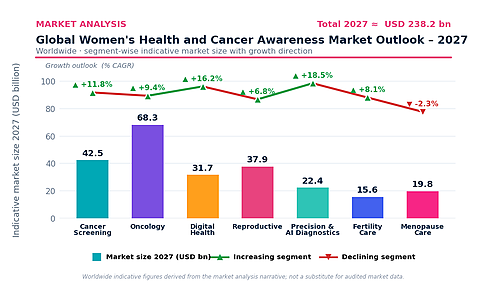
Global Women's Health and Cancer Awareness Market Outlook – 2027
The women's health sector continues to expand as healthcare systems, research institutions, and technology companies respond to the medical needs of women across the life course. Growth is being supported by increased attention to breast cancer, gynecologic cancers, reproductive health, maternal care, menopause, fertility, mental health, and chronic disease prevention. Greater awareness of sex-specific symptoms and health risks is also encouraging earlier consultation and more specialized care.
Cancer screening and diagnostic services remain important areas of development. Mammography, HPV testing, genetic assessment, liquid biopsy, digital pathology, advanced imaging, and artificial intelligence-supported diagnostics are being adopted to improve early detection and clinical decision-making. Public-health agencies and community organizations are also investing in education programmes designed to increase screening participation and reduce delays in diagnosis.
The oncology market is being influenced by targeted medicines, immunotherapy, precision treatment, companion diagnostics, minimally invasive procedures, and supportive-care services. Pharmaceutical and biotechnology companies are developing therapies for breast, ovarian, cervical, uterine, and other cancers affecting women. Research into fertility preservation, survivorship, rehabilitation, and quality-of-life care is also creating new opportunities across the healthcare sector.
Digital health is becoming increasingly important through telemedicine, remote monitoring, mobile health applications, electronic patient records, virtual consultations, and online patient education. These tools can support women living in rural or underserved areas and improve communication between patients, specialists, hospitals, and community providers. Data-driven healthcare platforms are also helping organizations identify risk, monitor outcomes, and personalize prevention and treatment plans.
Europe remains a significant centre for women's health research because of its clinical institutions, public-health programmes, cancer registries, and investment in medical innovation. North America continues to support growth through pharmaceutical research, advanced oncology services, digital health, and clinical trials. Asia-Pacific is experiencing increasing demand for screening, maternal services, cancer treatment, health education, and affordable medical technologies.
The future of women's health and cancer awareness will be shaped by prevention, earlier diagnosis, personalized medicine, inclusive clinical research, patient advocacy, and stronger coordination between healthcare providers. These developments are creating new opportunities for hospitals, researchers, pharmaceutical companies, technology developers, public-health organizations, investors, and institutions working to improve health outcomes for women worldwide.